
The Digital Care Shift: Sourcing and Sustaining Elite Telehealth Teams


Virtual care has long moved past its early adoption phase. Today, multi-site groups, specialized digital health platforms and traditional health systems increasingly rely on telehealth as a core vehicle for patient acquisition, chronic disease management, and behavioral health access. With this reliance comes a growing need for telehealth clinician sourcing.
As virtual care networks expand from localized pilots to multi-state operations, they hit a critical bottleneck that technology alone cannot solve: workforce design. You cannot build a high-performing, compliant virtual care clinic using standard hiring metrics. Scaling a telehealth network requires a deep understanding of virtual candidate psychology and the complex regulatory frameworks governing cross-border medicine.
The Virtual Profile: Autonomy and Tech-Literacy
Sourcing talent for a virtual-first environment requires a completely distinct clinical candidate profile. In a physical clinic, a provider operates within an immediate, face-to-face support structure. In a telehealth setting, clinicians must possess an elite level of clinical autonomy, rapid troubleshooting skills and an exceptional digital bedside manner.
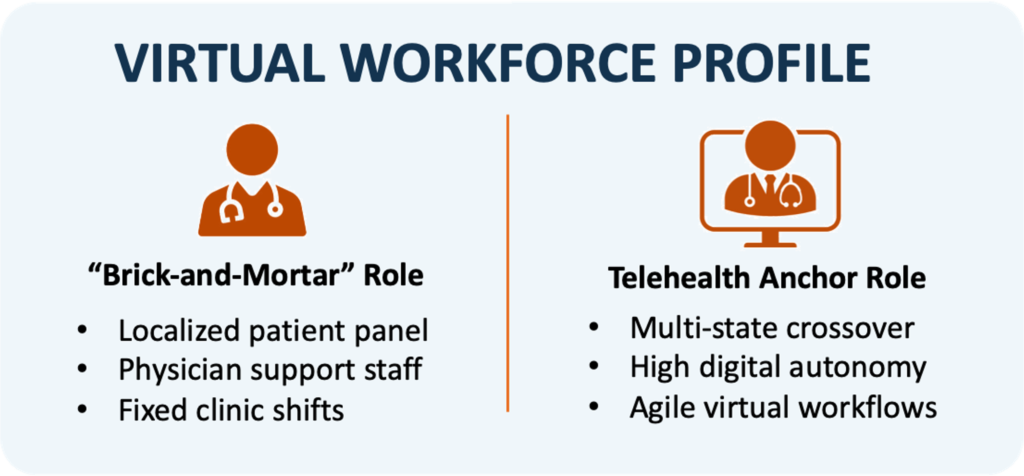
Consulting a patient through a screen requires a high level of communication clarity to establish trust quickly. Sourcing these specialized traits, along with needing a high comfort level navigating complex electronic health record (EHR) and remote monitoring platforms, isn’t easy, and finding these candidates requires a targeted, passive-market sourcing strategy rather than standard job board postings.
Navigating the Multi-State Licensing Grid
The ultimate hurdle for any scaling virtual care organization is managing multi-state medical licensing. To maintain optimal patient access across varying time zones and state lines, your roster must be strategically cross-licensed. This introduces immense administrative noise, from tracking disparate state board requirements to managing continuous credentialing updates.
To scale efficiently without skyrocketing internal HR overhead, digital health leaders are shifting toward a centralized Recruitment Process Outsourcing (RPO) model. By partnering with a specialized digital health staffing agency that possesses an established, multi-state network of vetted physicians and advanced practice providers, organizations can fluidly deploy permanent virtual anchors and responsive part-time or PRN support. This ensures continuous digital coverage, accelerated time-to-fill, and a seamless patient experience from coast to coast.


Related Articles