
Sourcing Beyond the Metro: How to Connect with Rural Clinical Talent


Recruiting top-tier doctors and nurses to major metro areas is relatively straightforward because the location usually sells itself. But if you are managing a regional hospital, a critical access facility, or a rural community clinic, you cannot rely on big-city pull to fill your open roles. In order to be successful in rural healthcare recruitment, organizations need to go beyond a standard location sell sheet.
To win elite talent in highly competitive, underserved markets, you have to stop treating recruitment like a numbers game. Instead, you need to understand what actually makes these clinicians tick. According to the Health Resources and Services Administration (HRSA), physician shortages remain disproportionately higher in non-metropolitan and primary care disciplines. Winning this market means figuring out exactly why a provider would choose to build a life and a career outside of the suburban sprawl.
Flipping the Pitch: Give Them Autonomy, Not Traffic
The most common mistake made in rural healthcare recruitment is trying to sound like a suburban medical group. High-performing physicians who choose non-metro positions rarely do so because they are looking for the same lifestyle. Instead, they are looking for something different: clinical independence, a wider variety of cases and a slower, healthier pace of life.
In a massive city hospital, a clinician’s day is often bogged down by endless red tape, corporate micro-management, and rigid silos. They see the same narrow types of cases over and over. In a regional or community setting, that same provider gets to practice at the absolute top of their license. They become a vital leader for the entire town. Your outreach should focus heavily on this sense of professional empowerment and freedom.
Decoding the Rural Clinician’s Psychology
To get the right candidates to reply to your messages, you have to speak to their actual, everyday motivations. True rural candidates aren’t looking for a brief stepping stone; they want an environment that fits their personal values.
- Real Medical Challenges: In a metro hospital, a doctor can easily hand off a tough patient to a massive web of sub-specialists. In a community clinic, your clinicians face incredibly dynamic, real-world challenges. They handle a broad mix of medical conditions and injuries, acting as the definitive care leader. For a passionate provider, this isn’t scary, it’s exactly why they went to medical school.
- The Outdoor Lifestyle: Many top-tier providers want to escape the daily grind and bumper-to-bumper traffic. They want an active lifestyle where hiking trails, lakes, and wide-open spaces are right outside their back door, not a two-hour drive away.
- A Close-Knit Place to Raise a Family: Clinicians with young families are deeply drawn to the safety and connection of a smaller town. They want smaller class sizes, neighborhoods where people know each other, and a stable environment where their kids can grow up with plenty of space.
Forget Relocation, Focus on Community Integration
You can find a candidate who loves your clinic workflow, but if their family hates the town, they are going to pack up and leave within a year. Keeping a provider for the long haul means looking past their resume and making sure their household connects with the community.
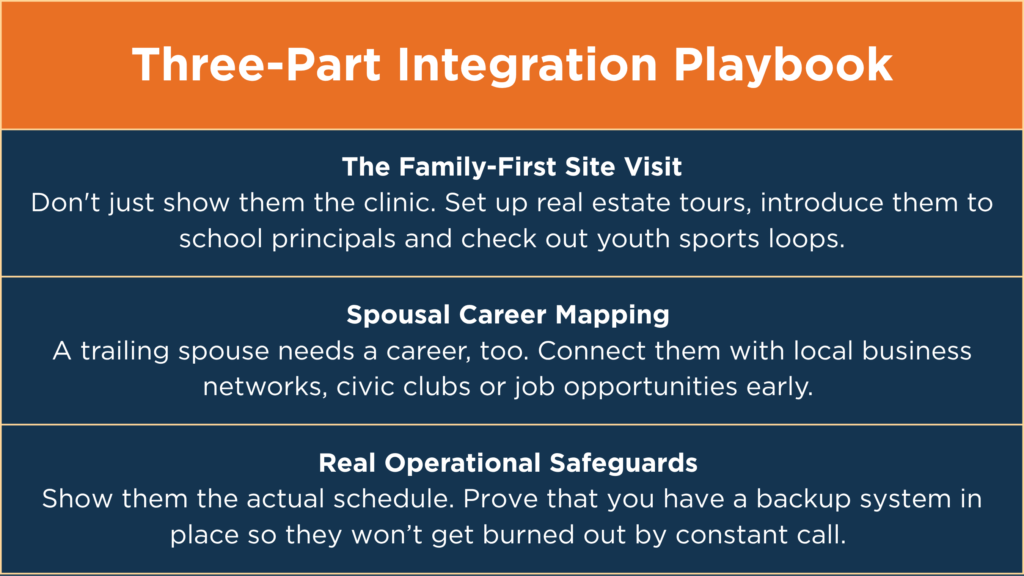
To turn a standard job offer into a long-term retention win, drop the corporate talk and use this practical three-step playbook during the interview process:


Related Articles